10 Jan 2026
Mateo Lafalce - Blog
In the architecture of a CNN, the Max Pooling layer is a fundamental component that sits between convolutional layers. While convolution captures specific patterns and textures, Max Pooling is responsible for making those patterns more robust and computationally efficient.
Max Pooling is a downsampling or operation. Its primary goal is to reduce the spatial size (width and height) of a feature map while retaining the most important information.
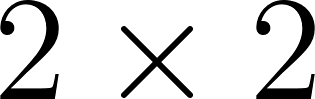
The process is straightforward: a small window, usually , slides across the input data with a specific stride. In each step, the algorithm looks at the values within that window and only keeps the maximum value, discarding the rest.
Max Pooling serves four critical purposes in deep learning:
While Average Pooling calculates the mean of the values in the window to provide a smoother representation, Max Pooling is more popular in modern architectures because it is better at capturing sharp features like edges and intense textures, which are often the most defining characteristics of an image.
Max Pooling is a strategic tool that allows CNNs to focus on what is in an image rather than where exactly it is located. It remains a standard practice in iconic architectures like VGG and ResNet to ensure models are both fast and accurate.
This blog is open source. See an error? Go ahead and propose a change.